Foshan, Guangdong, China · Outdoor Furniture Factory
0%

Choosing Commercial Hotel Furniture is not simply a matter of matching chairs to a lobby palette. It means deciding how each piece will perform through busy check-ins, rolling suitcases, spilled coffee, and years of daily use. Comfort matters. So does maintenance. A beautiful armchair that stains easily or blocks a housekeeping route can become an expensive mistake.

Industrial designer Charles Eames offered a useful principle: “The details are not the details. They make the design.” For hotel buyers, those details include seat height, fabric cleanability, sturdy joints, replacement-part availability, and the way furniture fits through a service doorway. They shape the guest experience long after the showroom visit. Yet specifications alone do not settle every choice. A durable surface may feel cold, while a softer fabric may need more care. The right trade-off depends on the hotel’s guests, staff routines, climate, and budget.

This guide explains how to assess furniture by space, function, materials, comfort, and lifecycle cost. It also considers practical checks, such as testing a dining chair at a real table height and confirming that a lounge sofa can be moved for floor cleaning. These steps help teams compare options more clearly. Still, no checklist can replace observing how people actually use a room. That part is easy to overlook.
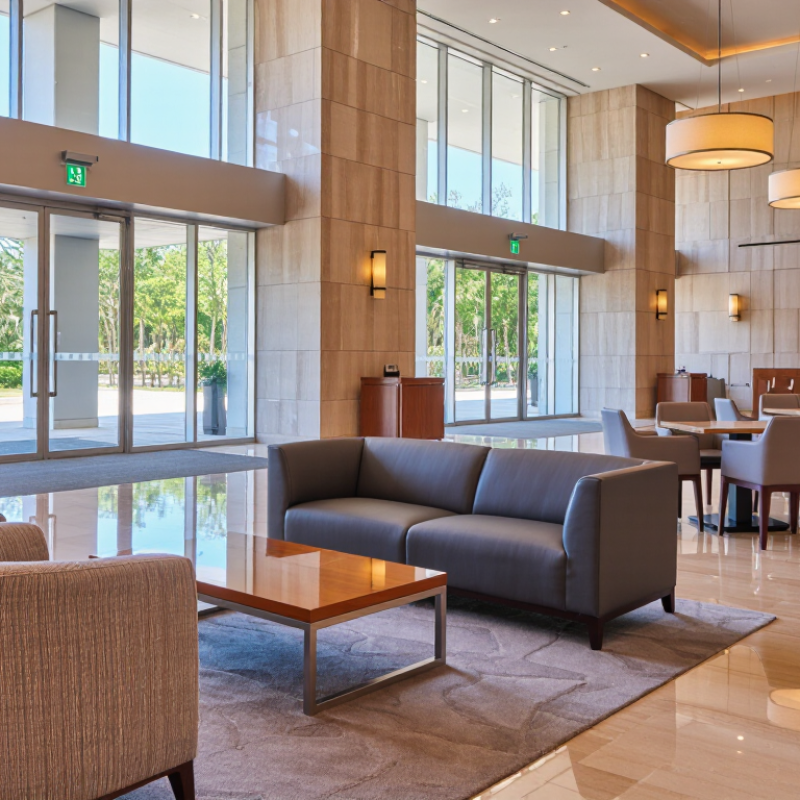
How to Choose Commercial Hotel Furniture?

Identify the Hotel’s Furniture Needs and Operating Conditions

How to Choose Commercial Hotel Furniture?
Identify the Hotel’s Furniture Needs and Operating Conditions

Start with the way guests and staff use each space, not with a catalogue. A family resort may need wipeable dining chairs and sturdy bunk beds; an airport hotel may need compact desks, charging access, and luggage benches. Measure room layouts, doorways, storage, and cleaning access. Note who moves furniture, how often rooms turn over, and whether carts must pass between beds. A beautiful chair is a poor choice if housekeeping cannot clean beneath it. Small details matter.

Estimate demand from the property’s own occupancy patterns, seasonality, and guest mix. AHLA’s 2024 State of the Industry report projected U.S. hotel occupancy at 63.6% for 2024; this national forecast is context, not a substitute for local booking data. The 2024 J.D. Power North America Hotel Guest Satisfaction Index Study includes guest-room experience in its assessment, underscoring the importance of comfort and room condition. Translate that into practical checks: sit on chairs after repeated use, inspect drawer slides, and test fabric against likely stains. A showroom sample can mislead. Record maintenance complaints and replacement frequency, too; those records may be incomplete, but ignoring them is worse. Choose finishes and construction that suit actual cleaning routines, staff capacity, and expected wear.

Match Furniture Design to Guest Experience and Property Style

Commercial hotel furniture should express the stay guests expect, not just fill a floor plan. In room planning, I start with the guest’s routine: where a suitcase lands, whether a chair invites a quiet coffee, and how easily someone can reach a bedside lamp. Small choices matter. A narrow desk may suit a short-stay city hotel, while a broad table can help families spread out maps, snacks, and chargers.

The property’s character should guide shape, color, and materials. A coastal inn might pair pale timber with washable woven textures; a downtown hotel may feel more at home with clean lines and compact seating. Keep the details useful. Rounded table edges can make tight walkways less awkward, and a sturdy luggage bench protects bedding from heavy bags. Check samples under the room’s actual lighting. A fabric that looks warm in a showroom can appear flat beside cool window light.

Durability still has to support the intended experience. Inspect drawer movement, chair stability, and the ease of cleaning seams before approving a full order. A beautiful lounge chair is a poor choice if guests avoid sitting in it. We sometimes overvalue visual consistency and overlook comfort; that deserves a second look. Let a small test room reveal what drawings cannot.

Evaluate Materials, Construction, Comfort, and Durability

Commercial hotel furniture must withstand more than a showroom test. Check upholstery against the cleaning routine: tightly woven, stain-resistant fabric can suit busy lobbies, while removable covers may help with repairs. Ask suppliers for abrasion-test results and the test method; ratings are useful only when compared consistently. Small details matter. Run a hand along seams and edges, where loose stitching or sharp trim can become daily irritants. For frames, inspect joints, corner blocks, welds, and replaceable glides. A sturdy-looking chair may still loosen under repeated use.

Comfort and durability belong together. Sit in each chair for several minutes, then check seat height, back support, and whether the cushion quickly recovers. A ten-minute showroom visit is not a full shift. J.D. Power’s 2024 North America Hotel Guest Satisfaction Index Study collected responses from 39,468 recent hotel guests, tracking satisfaction across aspects including the guest room and maintenance. The figure does not prove that a specific fabric drives satisfaction, but it underlines why room condition deserves attention. Request documentation for relevant BIFMA seating tests, and compare results with your expected traffic and maintenance schedule. One caveat: even strong test results cannot predict every stain, spill, or hurried cleaning. Reassess choices with housekeeping staff before ordering at scale.

How to Choose Commercial Hotel Furniture? - Evaluate Materials, Construction, Comfort, and Durability

Furniture Type Material Considerations Construction Checks Comfort and Ergonomics Durability and Maintenance Best-Fit Use
Guestroom bed frame Solid wood, plywood, or steel can provide a sturdy frame. Upholstered finishes add softness but require fabric-care planning. Check corner joints, center support, secured slats, and compatibility with the mattress size and weight. Confirm the frame height works with the mattress and is easy for guests to get in and out of. Look for replaceable components, stable fasteners, and finishes that tolerate routine cleaning. Guestrooms; select finishes to suit the room’s cleaning schedule and design.
Guestroom desk Commercial-grade laminate is generally easy to wipe clean. Veneer offers a natural-wood appearance but may need more careful protection. Inspect panel thickness, edge banding, drawer runners, cable access, and stability when drawers are open. Allow useful legroom and pair the desk with a chair that supports a comfortable working posture. Sealed edges help limit moisture intrusion. Check that drawer hardware and high-contact surfaces are replaceable or repairable. Guestrooms and business-oriented stays.
Guestroom seating Choose upholstery suited to expected use and cleaning. Tightly woven, cleanable fabrics or protected leather alternatives can be practical options. Check frame rigidity, reinforced joints, secure seat supports, and upholstery seams. Assess seat depth, back support, arm height, and cushion firmness using a seated trial. Review the upholstery care instructions and confirm that cushion covers or other wear parts can be replaced where applicable. Guestrooms, suites, and lounge areas.
Restaurant or lobby chair Wood, metal, and cleanable upholstery each suit different interiors; select finishes that match the cleaning products used on site. Inspect joints, welds, leg stability, and floor glides. Stackable models should be tested for safe, stable stacking. Check seat height and back support against the intended table height and expected sitting duration. Prioritize scuff-resistant finishes, replaceable glides, and upholstery that can be cleaned according to its care label. Restaurants, meeting areas, and high-traffic public spaces.
Wardrobe or storage cabinet Laminate and finished panels are common practical choices; solid wood and veneer offer different appearance and maintenance trade-offs. Check wall anchoring where required, door alignment, hinge quality, shelf support, and smooth drawer operation. Make sure shelves, hanging space, handles, and drawers are accessible to the intended guests. Inspect hinges and drawer hardware for serviceability. Protect exposed panel edges from repeated impacts and moisture. Guestrooms; match storage capacity to room type and length of stay.
Outdoor patio furniture Use materials specified for outdoor exposure, such as suitable metals, weather-resistant plastics, or appropriately treated timber. Check corrosion-resistant hardware, drainage, secure joints, and stability on the actual patio surface. Test seat shape and cushion comfort; confirm cushions can be removed and stored if needed. Follow manufacturer care guidance for sun, moisture, and seasonal storage. Inspect regularly for corrosion, loose fixings, and wear. Patios, terraces, pool areas, and other exposed spaces.

Evaluation note: Suitability depends on traffic levels, cleaning procedures, local fire and safety requirements, and the furniture’s intended location. Review product specifications, care instructions, and applicable standards before purchase.

Check Safety Standards, Maintenance, and Sustainability

Commercial hotel furniture must withstand rolling suitcases, damp cleaning cloths, and repeated guest use. Check seating against applicable ANSI/BIFMA standards, such as X5.4 for public and lounge seating. Request test reports covering stability, strength, and durability, rather than relying on a “commercial grade” label. Verify upholstery fire-test documentation and local requirements, which vary by location. A label alone proves little.

Maintenance details affect service life. Choose replaceable glides, accessible fasteners, and fabrics with clear cleaning instructions. Test cleaning products on a hidden seam before housekeeping uses them; harsh chemicals may fade finishes or damage coatings. Keep spare hardware nearby. Small repairs matter. Build inspections into room-maintenance logs, since minor issues can be overlooked during busy turnovers.

Sustainability needs evidence, not just green language. The U.S. EPA’s 2018 Advancing Sustainable Materials Management report estimated that 12.1 million tons of furniture and furnishings were generated as U.S. municipal solid waste that year. That figure makes repairability and reuse worth considering. Request material disclosures, recycled-content evidence, and refurbishment options, then compare expected service life. A recycled panel is not automatically durable. Procurement teams may not have time to verify every claim, so prioritize components likely to need replacement, such as seat cushions, drawer runners, and table edges.

Compare Costs, Suppliers, Delivery, and Installation Support

Choosing commercial hotel furniture means comparing the full project cost, not just the price per chair or bed. Request itemized quotes that separate furniture, customization, packaging, delivery, and installation. Check materials against daily use: a lobby sofa may face rolling suitcases, while guest-room drawers need sturdy runners. Ask suppliers for samples, written specifications, warranty terms, and references from comparable projects. Small details matter.

Tips: Measure doorways, elevators, and corridors before ordering. Confirm delivery dates, unloading arrangements, and who handles assembly. Ask what happens if pieces arrive damaged or incomplete. Get answers in writing.

Delivery and installation support can affect opening schedules as much as production time. Ask whether the supplier coordinates room-by-room placement, removes packaging, and checks each item after assembly. Clarify access requirements and possible extra charges for stairs or restricted delivery hours. A low quote may exclude important work. Even a careful spreadsheet can miss site conditions, so review the plan with your operations or facilities team. Their practical feedback may reveal issues that look minor on paper, but become awkward beside a narrow bedside table.

How to Choose Commercial Hotel Furniture?

Compare costs, suppliers, delivery, and installation support using these suggested evaluation weights.

Suggested planning weights, not market statistics: balance total cost and durability with delivery reliability, installation support, and supplier communication. Adjust the weights to fit your project requirements.

FAQS

What should a hotel consider before choosing furniture?

Start with how guests and staff use each space. Check room layouts, storage, cleaning access, and furniture movement.

How does hotel type affect furniture choices?

Family resorts may need wipeable dining chairs and sturdy bunk beds. Airport hotels may need compact desks, charging access, and luggage benches.

Why should staff test furniture before ordering?

Repeated use can reveal loose drawer slides or uncomfortable chairs. A showroom sample can mislead. Test fabrics against likely stains, too.

How can hotels estimate furniture demand?

Review local occupancy patterns, seasonal changes, and guest mix. A national occupancy forecast offers context, not a replacement for local booking data.

What should a hotel record when planning replacements?

Track maintenance complaints and replacement frequency. The records may be incomplete, but ignoring them leaves useful clues behind.

Which costs should furniture quotes include?

Request separate prices for furniture, customization, packaging, delivery, and installation. A low quote may exclude important work.

What should hotels check before delivery?

Measure doorways, elevators, and corridors. Confirm delivery dates, unloading, assembly, and extra charges for stairs or restricted hours.

What installation support should hotels confirm?

Ask who places furniture, removes packaging, and checks each item after assembly. Review the plan with operations or facilities staff; spreadsheets miss site details.

Conclusion

Choosing Commercial Hotel Furniture starts with understanding how each space is used, how many guests it serves, and the demands of daily operations. Furniture for a busy lobby, guest room, restaurant, or meeting area should suit its function while supporting the property’s style and the experience it aims to offer. Consider how proportions, colors, and finishes work together to create a welcoming and consistent atmosphere.

Next, assess materials, construction, comfort, and expected durability, since commercial furniture must remain practical through frequent use. Check that products meet relevant safety expectations, are straightforward to clean and maintain, and align with the property’s sustainability goals. Compare overall costs rather than purchase prices alone, and review suppliers’ product information, delivery schedules, and installation support. A thoughtful evaluation of these factors can help hotels select furniture that balances guest comfort, operational needs, long-term value, and a cohesive design.

Ethan

Ethan

Ethan is a professional marketing specialist with a strong understanding of the company’s products, their practical applications, and the needs of the people who use them. He combines product knowledge with clear, thoughtful communication, helping readers understand not only what a product offers......